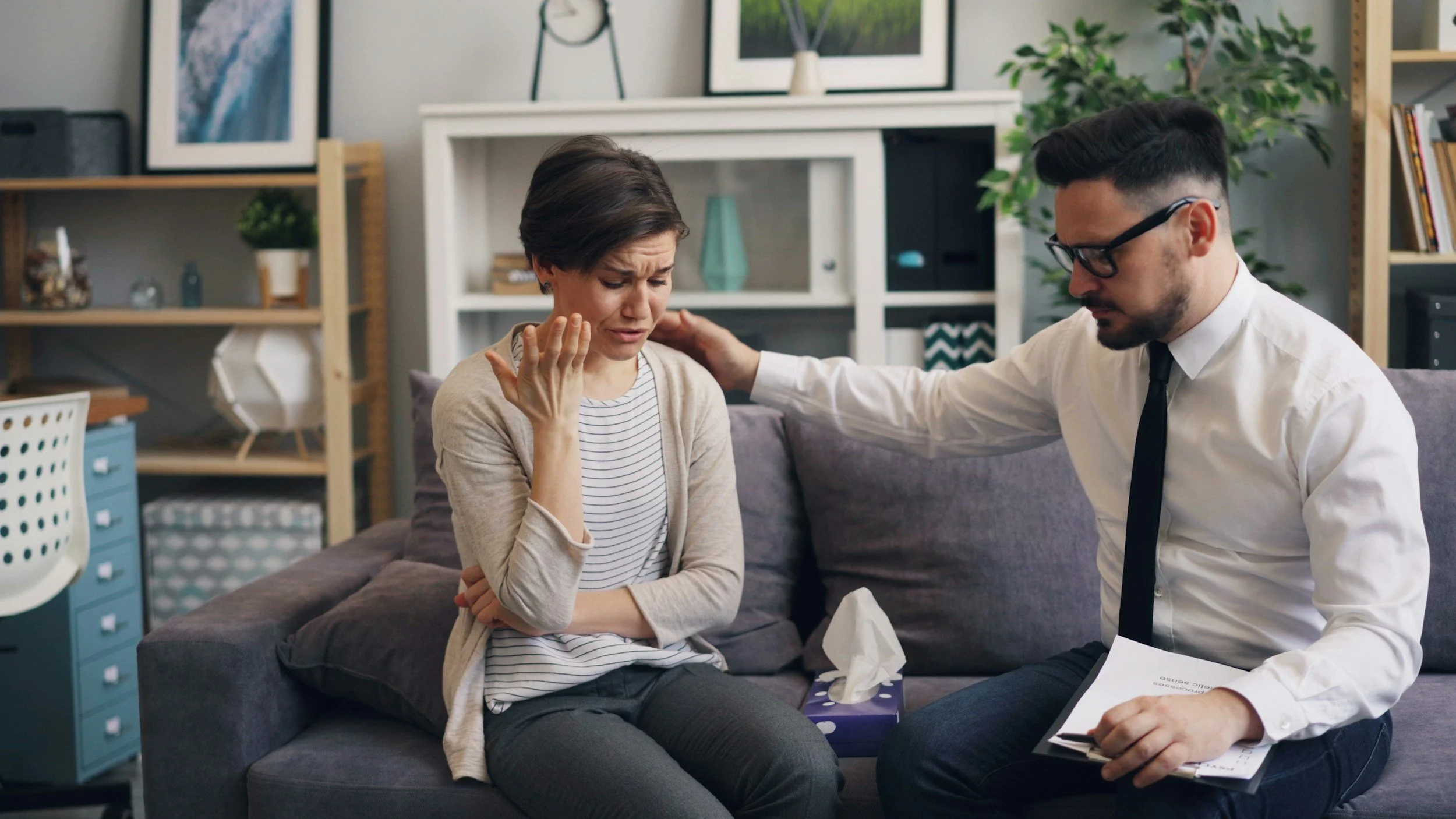
Couples Therapy, Philadelphia, PA

Life gets busy, and it's easy to drift. We provide the structure to ensure you're still choosing each other every single day.
You and your partner are used to winning. You navigate high-pressure careers, logistics, and endless to-do lists with ease. You are experts at efficiency, decision-making, and results.
But when you bring that same "get-it-done" energy home, something gets lost.
In your professional life, speed and attention to detail are assets. In your relationship, they are often barriers. You might find yourselves treating your marriage like a business project moving from one household task to the next while the actual connection between you starts to feel distant.
Getting to the Root of the Disconnect
Understanding your blueprint for relationships is very important. What if you never had healthy models for relationships or marriage growing up? What if you were taught that showing vulnerability was seen as weak? It is scary to think about sharing how you feel if you were never given the space to do so. If you grew up in a household where:
Emotions weren't discussed, they were just endured
Conflict meant yelling, withdrawing, or days of silence
Apologies were rare and repair didn't happen
Vulnerability was seen as weakness
Love was shown through actions but never words
Cultural expectations dictated how relationships "should" look
Now, you're navigating your own relationship without a roadmap. You're trying to build something healthy when you've never seen what that looks like. That's not your fault, and it doesn't mean you're doomed to repeat those patterns. It just means you need support learning what you weren't taught.
The "Double Life" Dilemma: Why You Feel Different at Home
Many of the couples we work with tell us they feel like two different people. At work, you are empowered, articulate, and effective. You command a room. You lead teams. You solve problems. But when you walk through the door at home, that voice seems to disappear.
If this sounds familiar, you aren’t alone. We see this dynamic constantly with driven professionals:
Feeling voiceless at home: You spend your day making high-stakes decisions and being heard, but at home, you feel "voiceless." You find yourself biting your tongue to avoid conflict, or feeling like your partner doesn't truly "get" the weight you’re carrying. You’ve become an expert at advocating for your career, but you’ve lost the habit of advocating for your own needs within your relationship.
The Exhausted Parent: You want to be present, but you’re often so exhausted from the "performance" required at work that your time with your kids feels like another shift. You find yourself managing their schedules and behavior rather than connecting with them. You feel guilty that you aren’t the "patient, joyful" parent you want to be, because you are perpetually running on empty.
Disappearing Intimacy: When you are both operating at 100% capacity in your professional lives, physical and emotional intimacy becomes the first thing sacrificed. It feels like "one more demand". You may find yourselves physically near each other but emotionally miles apart, waiting for a "better time" to connect that never seems to arrive on the calendar.
Function over Feeling: You have optimized your life to run like a well-oiled machine, but your relationship is suffering from the lack of "inefficiency." You are so efficient at managing your home as a unit that you have stopped being a couple. You need a space where you can stop "leading" and start being human with one another again.

Are you an interracial or intercultural couple? We offer specialized therapy for couples navigating racial and cultural differences, family disapproval, and cross-cultural parenting. Learn more →
Can Couples Therapy make things worse?
Couples therapy is a very vulnerable experience and can make things worse between partners before things get better. Our therapists work hard to make sure the couple slowly eases into the therapy process and both partners learn to self soothe. We also offer 90 minute sessions for couples who are really struggling and need more support. You spent too much time hurting in your relationship. Now is the time to let go of what is keeping you stuck so you can address the issues in your relationship.
The American Association of Marriage and Family Therapists reports an overall success rate of 98%. If both parties are committed to the therapy process, the relationship can get better.
But "better" doesn't always mean staying together. Sometimes the best outcome of couples therapy is learning how to separate with respect and clarity, or realizing that the relationship has run its course. A skilled therapist will help you figure out what's right for you, not impose their values on your relationship.
How do you know if a relationship is worth saving?
How couples therapy works at Space to Reflect:
We start where you are
In the first session, we'll learn about your relationship history, what brought you to therapy, and what you're hoping to change. We'll also teach you how to regulate your nervous system so you can stay present even during difficult conversations. For interracial and intercultural couples, this includes understanding how each partner's racial identity, cultural upbringing, and family dynamics shape their expectations of the relationship.
We teach you practical tools
You'll learn specific communication tools, conflict resolution strategies, and ways to build emotional intimacy. All our therapists are Gottman trained at different levels so we teach practical tools from the Gottman Method.
We create safety first
Before we dig into painful issues, we make sure both partners feel safe enough to be vulnerable. This might mean learning to self-soothe, establishing ground rules for discussions, or slowing down when things get too heated.
We help you understand each other's triggers
Often, fights aren't really about the dishes or whose turn it is to take out the trash. They're about deeper needs for respect, appreciation, autonomy, or connection. We'll help you understand what's underneath your conflicts.
We help you rebuild a sustainable partnership
We help you build the foundation to handle conflict, bridge communication gaps, and advocate for your needs without needing a therapist present. You’ll learn how to have a partnership that allows you to be the same empowered, authentic person at home that you are at work.

We move at your pace
Some couples are ready to dive deep immediately. Others need more time to build trust. We adapt to what you need, and we're honest about what's working and what isn't.
The relationship you want is possible, but it requires both of you to show up. It requires vulnerability, honesty, and a willingness to do things differently than you've been doing them. You don't have to keep having the same fights. You don't have to keep feeling disconnected. You don't have to accept that "this is just how it is." You don't have to figure this out alone. We're here to help you find your way back to each other. Reach out today.
Meet the therapists who specialize in Couples Therapy


Couples Therapy, Philadelphia, PA
1429 Walnut St # 1601, Philadelphia, PA 19102